Mahindra marketing strategy is closely tied to its rich legacy and diverse business empire. Founded in 1945 as Mahindra & Mohammed, it has grown into one of India’s top conglomerates. Today, Mahindra leads in tractors, utility vehicles, IT, and financial services, while also operating in real estate, renewable energy, agriculture, and hospitality. This wide footprint shapes its brand positioning. In this blog, we’ll explore how Mahindra’s brand story, SUV and EV success, rural focus, and sector diversity power its marketing and growth.
Just like the boAt marketing strategy redefined the D2C game and Samsung’s success story showcases global dominance, Mahindra’s brand journey offers lessons in resilience, rural connect, and diversified growth.
Brand Story
Mahindra’s roots date to 1945, and key milestones in its brand story include:
- 1945: Founded as Mahindra & Mohammed by J.C. and K.C. Mahindra in Ludhiana, Punjab (en.wikipedia.org).
- 1947: Secured a license to assemble Willys Jeeps in India, beginning indigenous Jeep production (en.wikipedia.org).
- 1982: Launched a dedicated tractor divisionen.wikipedia.org, expanding into farm equipment.
- 2002: Introduced the Scorpio, the first indigenously designed Mahindra SUV (en.wikipedia.org), which became a game-changing model in the utility vehicle segment.
- 2011: Rolled out the corporate brand “Mahindra Rise” and tagline to unify its image across businesses and emphasize aspirational values (en.wikipedia.org).
These milestones show how Mahindra evolved from a steel and Jeep assembler into an automotive and industrial leader. The 2011 “Rise” campaign, for example, frames Mahindra products as fulfilling customers’ ambitions – a theme that recurs in its marketing strategy (en.wikipedia.org).
Mahindra Marketing Strategy
- Mahindra employs a mix of traditional, digital, and grassroots tactics to engage consumers. The company runs high-impact campaigns and contests on social media to generate buzz.
- For instance, it launched a “Dubsmash & Win KUV100” user-content contest encouraging fans to create videos. Its #ChooseTogetherChooseRight campaign highlighted affordable yet aspirational vehicle options for budget-conscious buyers.
- Mahindra maintains an active presence on platforms like Twitter, Facebook, and Instagram, allowing it to receive real-time feedback and foster community engagement. It also creates rich content (blogs, videos, infographics) on topics aligned with its businesses, such as agriculture, rural innovation, and renewable energy – positioning itself as a thought leader in those areas.
- Influencer marketing and partnerships are another tactic. Mahindra collaborates with social-media influencers and brand ambassadors (especially in the farming and environmental space) to broaden its reach and lend authenticity to its messaging.
- One standout aspect of Mahindra’s strategy is how Anand Mahindra uses his social media to spotlight customers — sometimes even surprising them with gifted vehicles. These posts generate organic word-of-mouth and goodwill, despite minimal traditional ad spend.
- In sum, Mahindra’s strategy blends aspirational branding with community-focused campaigns to build both national brand appeal and local trust.
Automotive and EV Success
- In the automotive sector, Mahindra has become synonymous with rugged SUVs and utility vehicles (UVs). Nearly all of Mahindra’s models – from the Thar off-roader to the Scorpio and Bolero – are SUVs, a focus that made the company “among India’s top SUV makers by market share.”
- This SUV lineup has fueled strong sales. In April 2025, Mahindra leapfrogged Hyundai to become India’s second-largest carmaker by retail sales, thanks to surging demand for its XUV3XO, Scorpio, Thar, and Bolero models (as well as new electric SUVs).
- For the full 2024–25 fiscal year, Mahindra sold about 512,626 vehicles (12.34% market share), placing it fourth overall behind Maruti Suzuki, Hyundai, and Tata Motors. Its domestic car sales have grown faster than many rivals in recent quarters, underscoring its strong positioning in the SUV market.
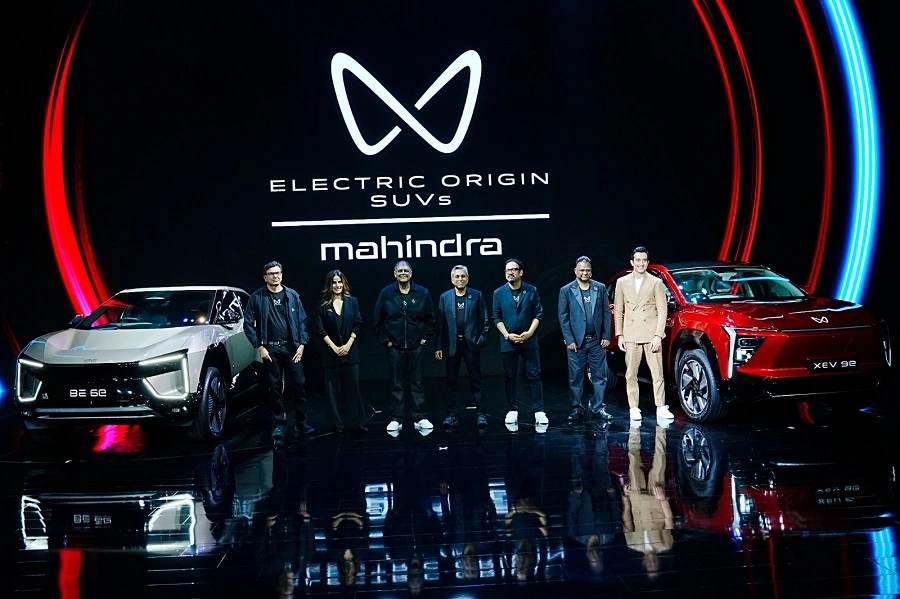
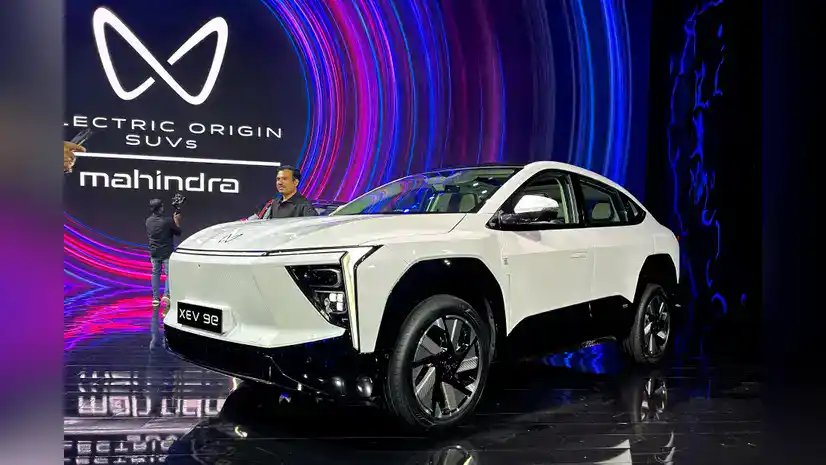
- Mahindra is also pushing into electric vehicles. In 2025, it launched the Origin series EVs (XEV 9e and BE 6) and quickly achieved over 3,000 customer deliveries by April. Early sales have been encouraging, with waiting lists extending months in some regions.
- While EVs still form a small part of Mahindra’s volume, the growth is rapid. The company sold 2,632 electric vehicles in one recent year – a 343% year-on-year increase. Although modest compared to EV market leaders, this shows Mahindra gaining traction among eco-conscious buyers.
- By combining its SUV expertise with EV innovation, Mahindra is attempting to carry its legacy of rugged vehicles into India’s green mobility future.
As India shifts to EVs, customer preferences evolve much like what we saw in the electronics retail shift toward smarter, connected ecosystems.
Competition
- Mahindra operates in a fiercely competitive Indian auto market. Maruti Suzuki remains the clear leader, holding around 40% market share.
- However, Mahindra has carved out a solid space in the next tier of players, typically holding 12–13% share, often surpassing Hyundai or Tata in specific quarters.
- What gives Mahindra an edge? It’s full-SUV lineup. Unlike competitors that split sales between hatchbacks, sedans, and SUVs, Mahindra goes all in on utility vehicles.
- In April 2025, this strategy paid off — Mahindra leapfrogged Tata and Hyundai in percentage growth, clocking a 24% year-on-year sales jump.
Impact On Rural India
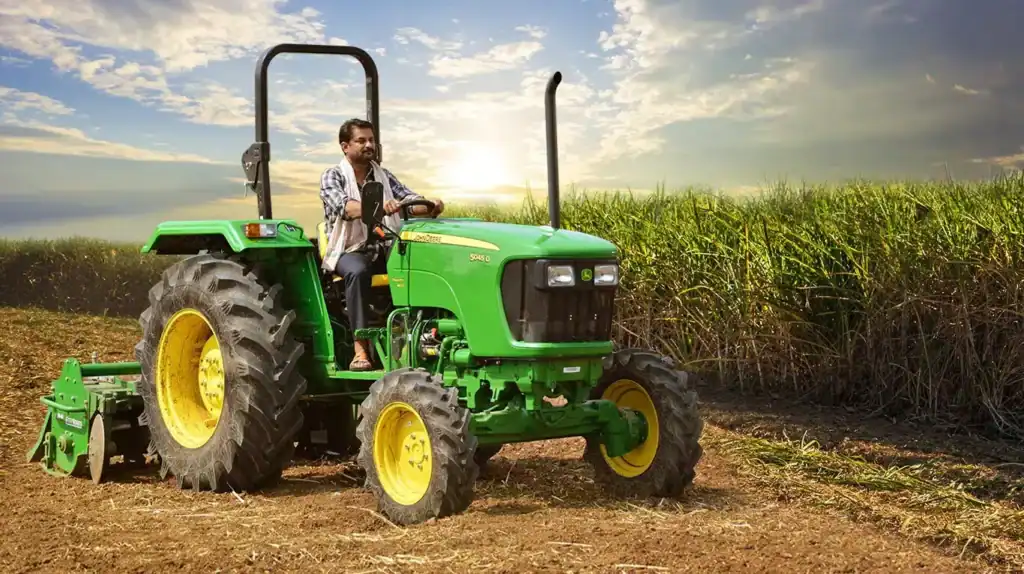
- Rural India is core to Mahindra’s identity and strategy. Its farm equipment business alone has put millions of tractors into service. Mahindra’s five Indian tractor factories have produced over 4 million tractors to date, serving farmers across diverse geographies.
- Mahindra Tractors often markets directly to rural communities. For example, the recent 45-day “Rag Rag Laal Hai – Ashwamedh” campaign toured the country, visiting 500+ dealerships and interacting with thousands of farmers.
- According to Mahindra, this initiative aimed to “highlight Mahindra’s association with India’s agricultural sector” and reinforce its position in rural markets.
- Beyond equipment, Mahindra’s financial services arm is explicitly focused on rural and semi-urban customers. Mahindra Finance now serves over 11 million customers, with 1,365 offices reaching into 516,000 villages and 8,000 towns.
- This vast rural network helps bring loans (for vehicles, tractors, business, etc.) to remote areas, “transforming more than 1.1 crore lives” across the country.
- The group’s stated mission reinforces this rural focus: Mahindra proclaims a goal of “enabling rural prosperity and enhancing urban living” to drive positive change.
- In practice, rural marketing (through local events, vernacular advertising, and on-field agents) and financing have made Mahindra a familiar and trusted brand in villages.
Mahindra’s deep-rooted presence in rural India echoes the brand love seen for Fabindia’s cultural connect and traditional value branding. In fact, Mahindra’s agri-tech and wellness machinery is just as important for Bharat as India’s fitness obsession is to Gen Z urbanites.
Diversified Business Segments
Mahindra’s marketing and branding are bolstered by its presence in many sectors. Key segments include:
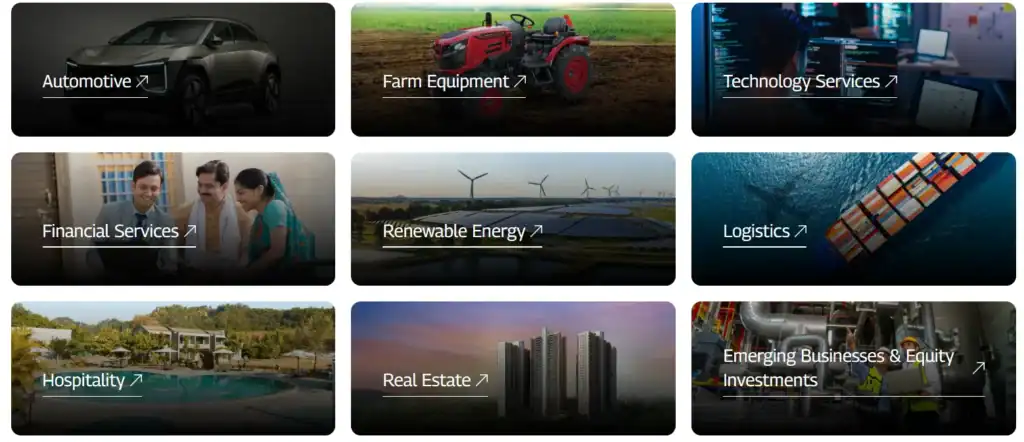
- Farm Equipment: Mahindra’s tractor division is the world’s largest by volume (mahindra.com). Mahindra Tractors (the Farm Equipment Sector) sells thousands of units each year and prides itself on rugged, versatile machines built for Indian farms. The company has invested in R&D at its Chennai research valley and partnerships with global brands to expand its product range (autocarpro.in).
- Real Estate: Through Mahindra Lifespaces and Mahindra World City, the group develops residential and commercial projects. Its real-estate arm has a pan-India footprint (in dozens of cities) with millions of square feet under development. Mahindra cites a “strong presence in real estate development” as part of its portfolio (mahindra.com), leveraging its brand trust to market homes and communities.
- Renewable Energy: Mahindra Susten, the group’s renewable-energy arm, is a leader in solar/wind projects. It has developed over 1.55 gigawatts (GWp) of solar capacity in India (mahindra.com), building utility-scale solar farms and rooftop installations. This not only diversifies Mahindra’s business but also reinforces its “planet-positive” messaging in marketing materials.
- Financial Services: Mahindra Finance, as noted, is a top rural NBFC. It offers vehicle loans, SME financing, and microfinance, capitalizing on Mahindra’s existing dealer and customer network. Its 11M+ customer base and 14.1 billion USD assets under management (mahindra.com) make it one of India’s largest non-banking financial companies. The firm’s success enables cross-selling (e.g. auto loans tied to Mahindra vehicle sales) and adds credibility to the Mahindra brand in villages and towns.
- Hospitality (Leisure): Mahindra Holidays (Club Mahindra) is a major player in vacation ownership. Since 1996, its flagship Club Mahindra membership brand has grown to ~290,000 members with access to 140+ resorts in India and abroad (clubmahindra.com). This adds an aspirational, lifestyle dimension to Mahindra’s image. Marketing for Club Mahindra emphasizes family-friendly experiences and “good living,” which complements Mahindra’s overall brand theme of improving quality of life.
Each of Mahindra’s business divisions creates new customer touchpoints and cross-promotional opportunities. A customer might buy a tractor, finance it through Mahindra, and later vacation at a Mahindra resort. This interconnected ecosystem strengthens brand loyalty. As Mahindra.com notes, the group leads in farm equipment, utility vehicles, IT, and financial services, with a strong presence in renewable energy, logistics, hospitality, and real estate. These diverse ventures help Mahindra stay relevant across both rural and urban India. As India’s roads electrify and fly, Mahindra is setting itself up to not just compete in EVs but even complement macro changes we explored in Indian aviation market trends.
Conclusion
A marketing approach that connects Mahindra’s compelling brand narrative to its many businesses has driven its success. Mahindra has established brand equity by highlighting its 1945 steel merchant heritage and combining it with customer-centric ads, internet interaction, and social initiatives like “Rise”. Its success in SUVs and expanding presence in EVs is due to great marketing and dedicated customers. Mahandra’s devotion to rural India (via farm equipment and rural financing) and expansion into real estate, energy, banking, and hospitality provide it many platforms to tell its “Rise” story. This comprehensive strategy means Mahindra’s marketing is about conveying a vision of growth and empowerment from country farmlands to city offices, not just selling cars or resorts.
Sources: Authoritative sources and company reports on Mahindra’s history, marketing, and business (see citations) have been used to compile this analysis. Each key point above is backed by recent data or official statements (en.wikipedia.org) (mahindra.com) (autocarpro.in) (auto.hindustantimes.com).
All Sources
- Mahindra Group – Wikipedia
- Mahindra Q4 FY25 Financial Results
- Mahindra Marketing Strategy – Sonali Srivastava
- Mahindra Leads Indian Carmakers – Reuters
- Mahindra Tops SUV Market – HT Auto
- Mahindra Delivers 3000 Origin EVs
- Tata EV Share Drops as Mahindra Gains – Rest of World
- Mahindra Tractors ‘Ashwamedh’ Campaign – Autocar Professional
- Mahindra Renewable Energy Business
- Club Mahindra Overview